

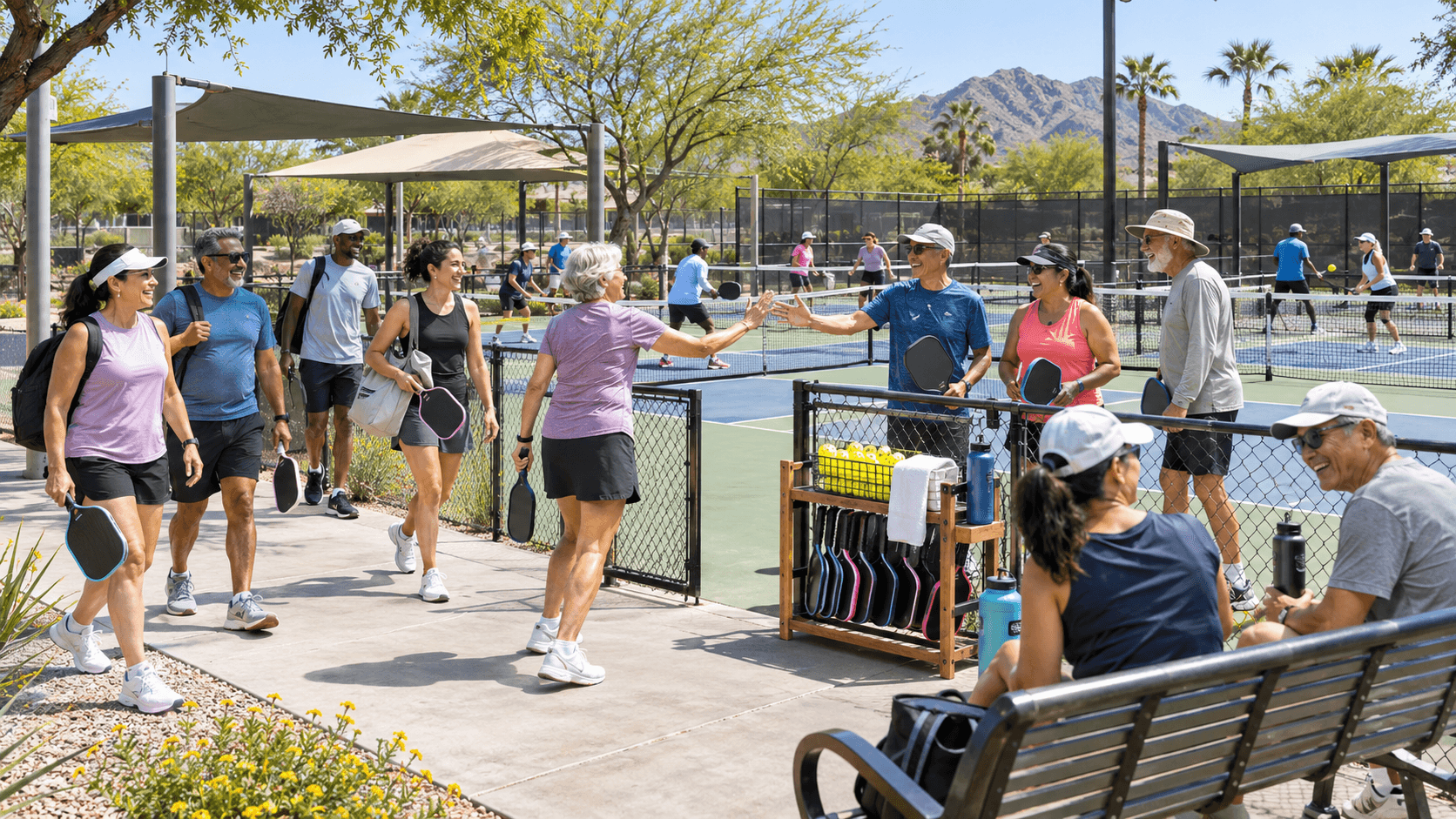
A sport does not need to defeat tennis to earn a lasting place in people’s weeks. That is the useful idea inside a recent skeptical-turned-curious account of pickleball in Singapore: the game’s strength is not novelty alone, but its ability to get more kinds of people playing together.
The report follows beginners, former racket-sport players and social groups rather than trying to declare a winner in a racket-sport popularity contest. That is the right lens for a sport still growing fast in many communities.
At a Glance
|
 AI generated photo for All American Pickleball Association. |
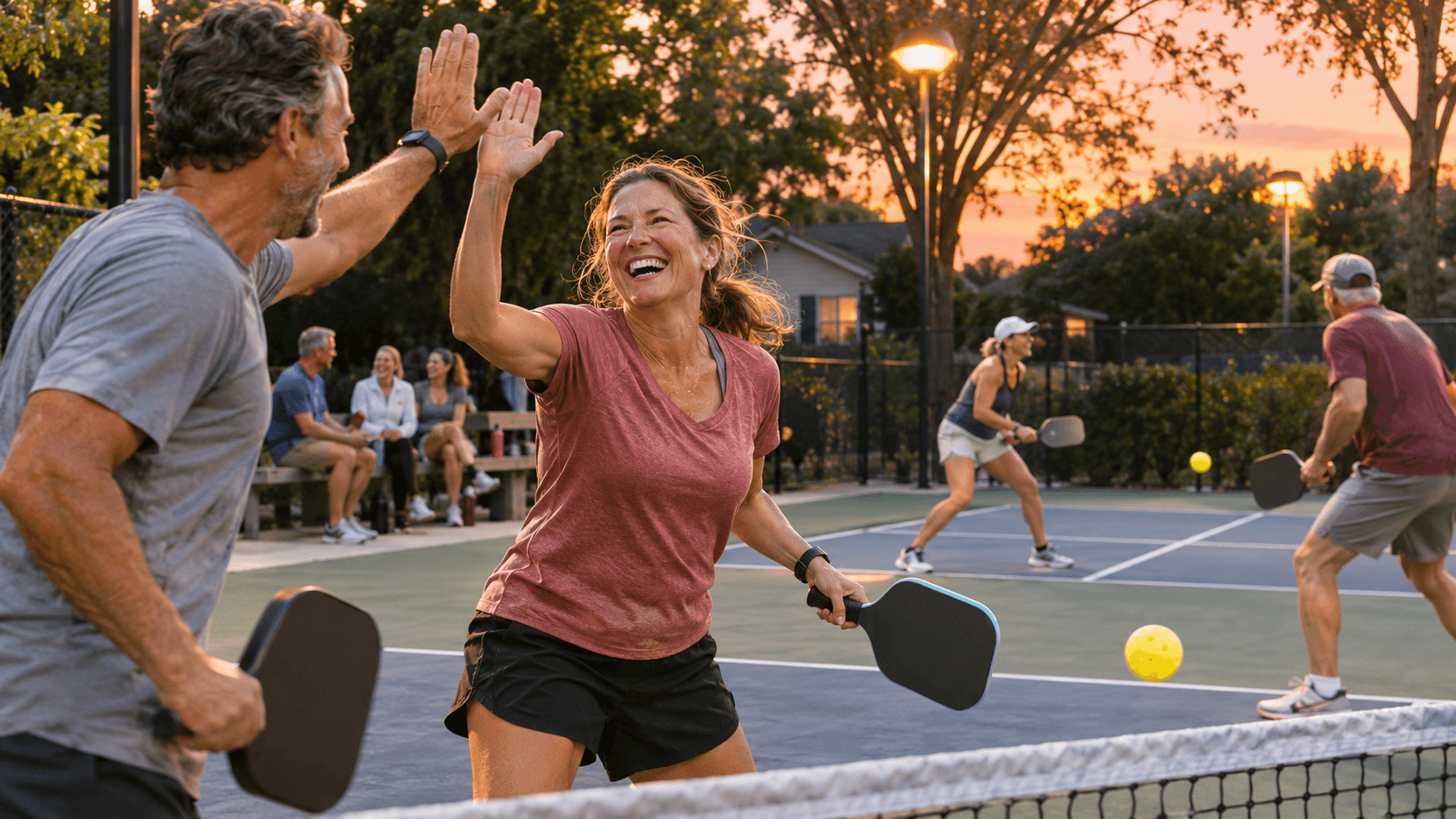
The case for staying power starts with a lower barrier to a good rally.
New players can learn a serve, a return and basic kitchen awareness quickly enough to share a competitive-feeling game with more experienced friends. That does not make pickleball easy; it makes early enjoyment more available.
The same report quotes a former youth tennis player who sees the sport’s appeal in its accessibility and broad mix of ages, incomes and skill levels. That observation will sound familiar to many U.S. open-play regulars: a court can hold seasoned competitors, recovering athletes and first-time players in the same evening.
What “inclusive” actually requires
Accessibility is not automatic. A welcoming session needs a host who explains fair rotation, players who call the score clearly, and a court culture that does not punish a new player for every missed third shot. Fun is often the result of structure, not the absence of it.
For clubs, the practical checklist is straightforward: offer beginner blocks, label competitive play honestly, teach basic safety, and make it clear how a solo player can join. Those habits give newcomers a chance to become regulars rather than one-time visitors.
Equipment matters, but it should not be the first gate. A modest paddle and court shoes are enough to learn whether the game fits. Advice about upgrades can wait until a player has developed a consistent grip, swing, and schedule.
Why the social loop matters
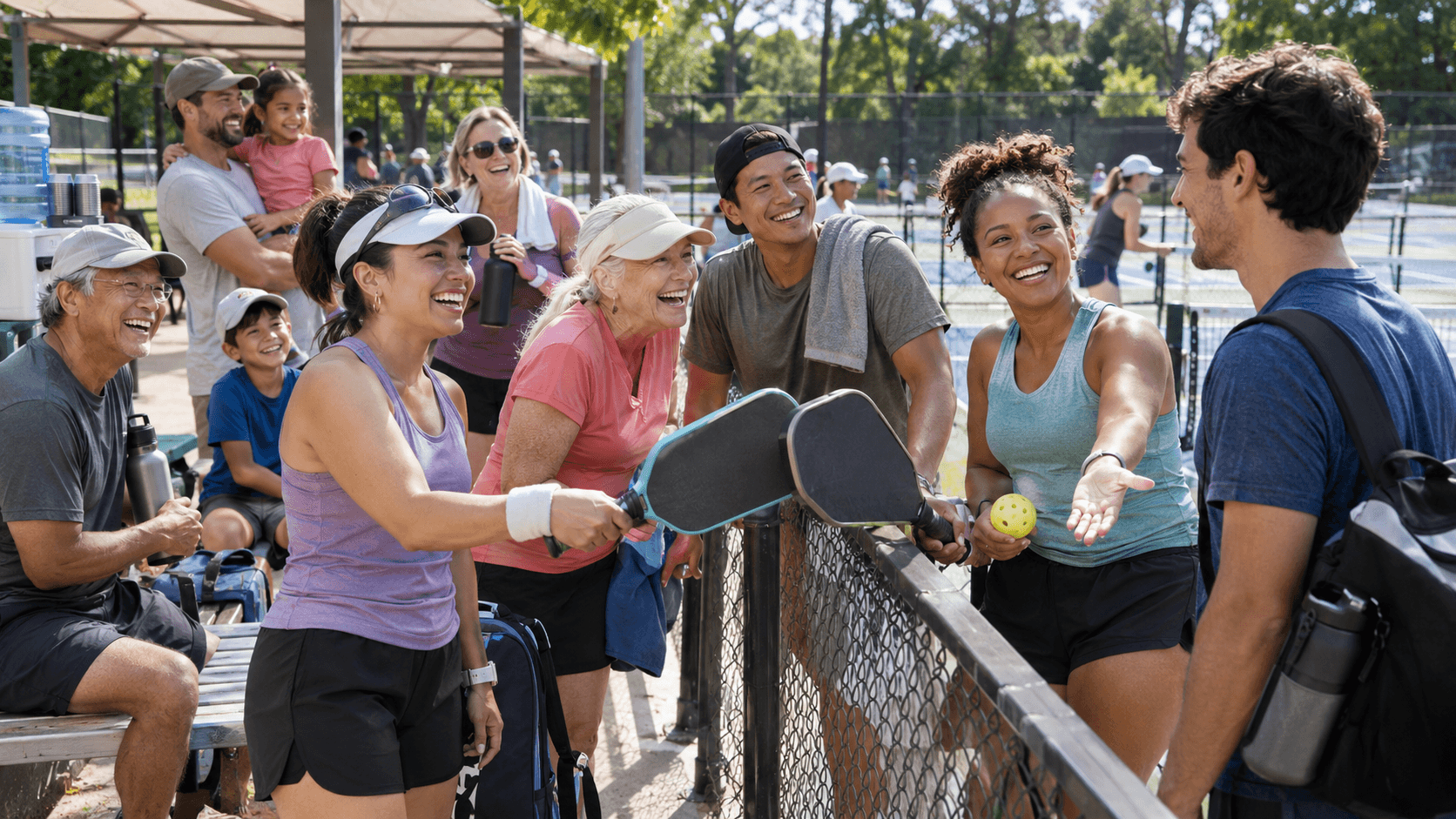
Pickleball is unusually effective at making a repeatable social plan. People can reserve an hour, rotate partners, laugh at a strange net-cord bounce and leave having met someone new. The game’s vocabulary—dink, kitchen, Erne, reset—becomes a shared language fast. That shared language can make a first session feel less like starting from zero. |
 AI generated photo for All American Pickleball Association. |
Popularity is not the same thing as permanence
New courts, large tournaments and celebrity interest are all useful signals, but none alone proves that a sport will endure. The more reliable measures are quieter: do public sessions have clear pathways for newcomers, do leagues retain players, and can facilities schedule demand without crowding out other users?
The reported tournament turnout in Singapore is a meaningful local marker, not a universal forecast. Different places have different weather, court supply, school programs and recreation budgets. A healthy pickleball scene is built court by court.
What players can do now
Be the person who offers a short warm-up rally before a game. Invite a newer player into a rotation. When a game is lopsided, try a learning-focused pairing instead of treating every open-play match like a bracket final.
Players can also protect the sport’s reputation by sharing courts well: observe reservation rules, keep bags out of walkways, call balls fairly and respect nearby players. Those small habits matter when facilities decide how to balance pickleball with tennis and other recreation.
The takeaway is not that pickleball must remain exactly as it looks today. Growth changes schedules, skill levels and expectations. But a sport that gives people an easy route into play, competition and conversation has a strong foundation to keep evolving.
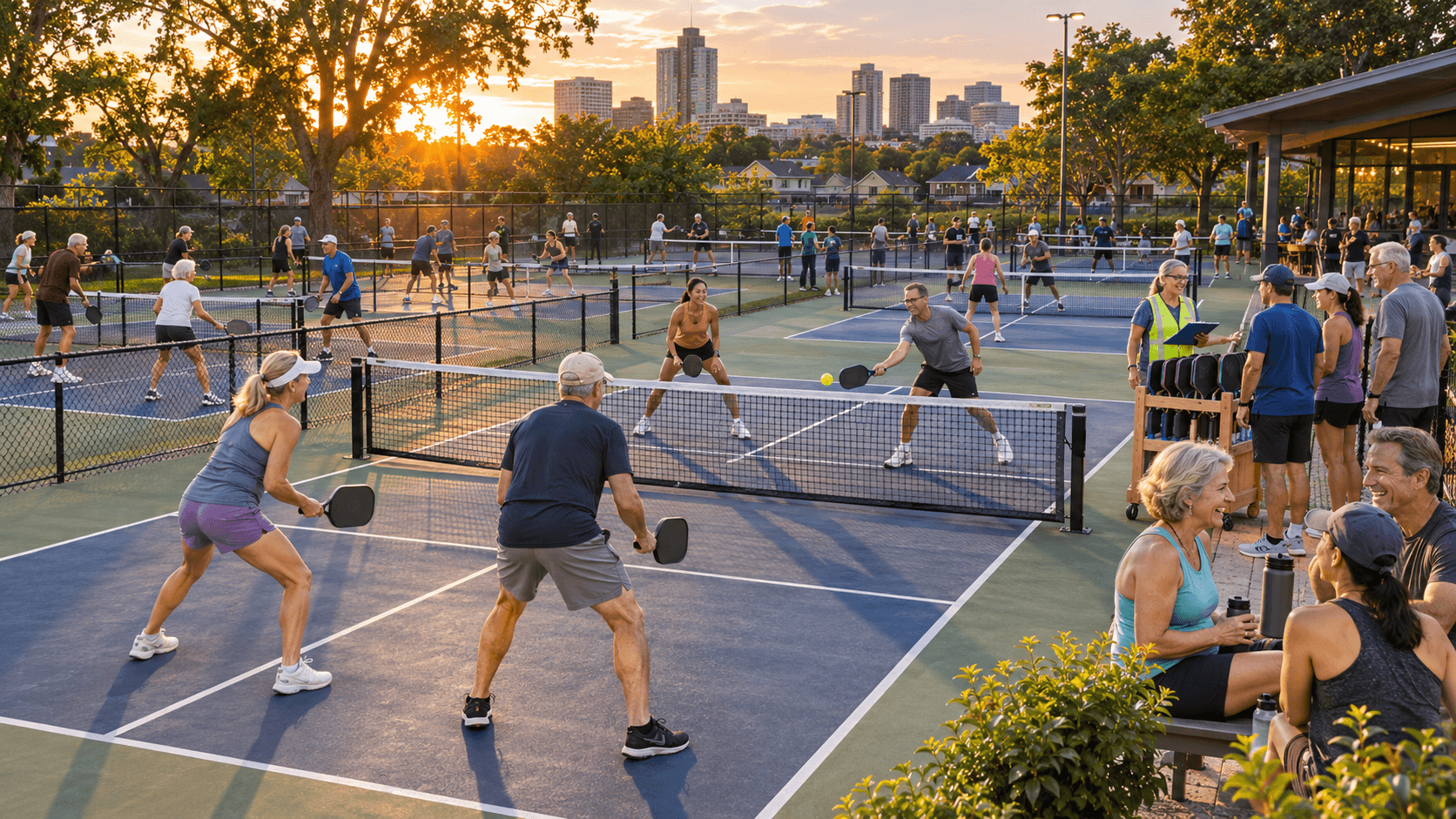
Look at your own court: the best evidence of staying power may be the players who are already planning next week’s game. |
 AI generated photo for All American Pickleball Association. |
29 Comments
Join the conversation
It is nice to see age mentioned here. Finding something my aunt and my teenage cousin both enjoy would be a win.
Our group has one simple rule: explain the score without making anyone feel silly. It helps new players relax.
I would love more casual games alongside tournaments like the Open. Competing can be fun, but some of us just want to get moving.
The idea of welcoming newcomers sounds good. Do regular players usually make space for beginners during the busy evening slots?
Former racket players may pick it up fast, but I'd like to hear more from people who have never played any racket sport.
I am still a bit skeptical about how long the buzz will last. The weekly groups will tell us more than one big event.
Does anyone know how groups handle mixed skill levels? I'd like to try, but I wouldn't want to slow everyone down.
I'm glad the question is whether people return. A busy opening event is exciting, but regular weekday games say more about a sport.
Three days and over 1,000 participants is quite a start. I hope smaller neighbourhood groups get some attention as well.
Clear etiquette would help at shared courts. It's awkward when you're new and can't tell whose turn it is to play.
I tried pickleball with my parents last month and we could actually play together. That is harder to manage with some other sports.
Three days and over 1,000 participants is a strong start. I would like to know whether the regular sessions are growing too.
Clear court etiquette matters, especially when people are waiting to play. A friendly rotation system can make a busy session work.
The social groups are what interest me most. Showing up alone feels much less awkward when a game welcomes new people.
I agree that tennis does not need to lose for pickleball to stick around. There is room for people who enjoy both.
Four categories at the Open sounds sensible. Were any of them set up for people playing their first tournament?
I came from badminton and found pickleball easier to pick up than I expected. Still took me a while to stop swinging so hard.
Court access seems like the real test in Singapore. It is hard to make a weekly habit if you cannot find a place to play.
The mix of beginners and former racket players sounds like the fun part. It helps when everyone is willing to explain the rules once.
More than 1,000 people at the first Open is impressive. I wonder how many of them will still be playing a few months from now?
I was skeptical about pickleball until a neighbour invited me along. The social side is what got me to play a second time.
Four categories at the Open sounds promising. I'd be interested to know if there were games suited to complete beginners too.
The part about welcoming newcomers is important. A friendly first game can make all the difference when you don't know the rules yet.
As someone who still plays tennis, I don't see why the two need to compete. There's room for both if courts are planned well.
I tried it with colleagues last month and was surprised how quickly we got a game going. I'd happily go again.
Court access seems like the real test. If it gets hard to book a place to play, beginners may give up pretty quickly.
My parents and I can actually play pickleball together, which never really worked with tennis. That matters more to me than which sport is bigger.
More than 1,000 players at the first Open is a big turnout. I wonder how many started playing only this year.
I like the focus on whether people keep coming back. Has anyone found a beginner group that makes it easy to join a game?