Pickleball players at one European Open category faced something new on November 5: official in-competition anti-doping testing. The test program did not apply to everyone at the event, but it marks a meaningful shift in what international pickleball competition may ask athletes to understand.
For most players, the takeaway is not alarm. It is preparation. If you enter higher-level events, medications, supplements and tournament rules deserve the same early attention as your paddle and partner.
At a Glance
|
 AI generated photo for All American Pickleball Association. |
What happened at the European Open
The World Pickleball Federation and European Pickleball Federation announced the initiative on October 21. Their release described it as the first official in-competition anti-doping testing program at the European Open, conducted under applicable WPF anti-doping rules.
The event itself was an international tournament at Ali Bey Club Manavgat in Türkiye. The organizers publicly identified the date and the fact that a designated category would be tested, but they did not publicly identify the category or say that every competitor would be selected.
That scope matters. A targeted in-competition program is a real integrity step, but it is not the same thing as universal testing or a complete account of a long-term global testing system.
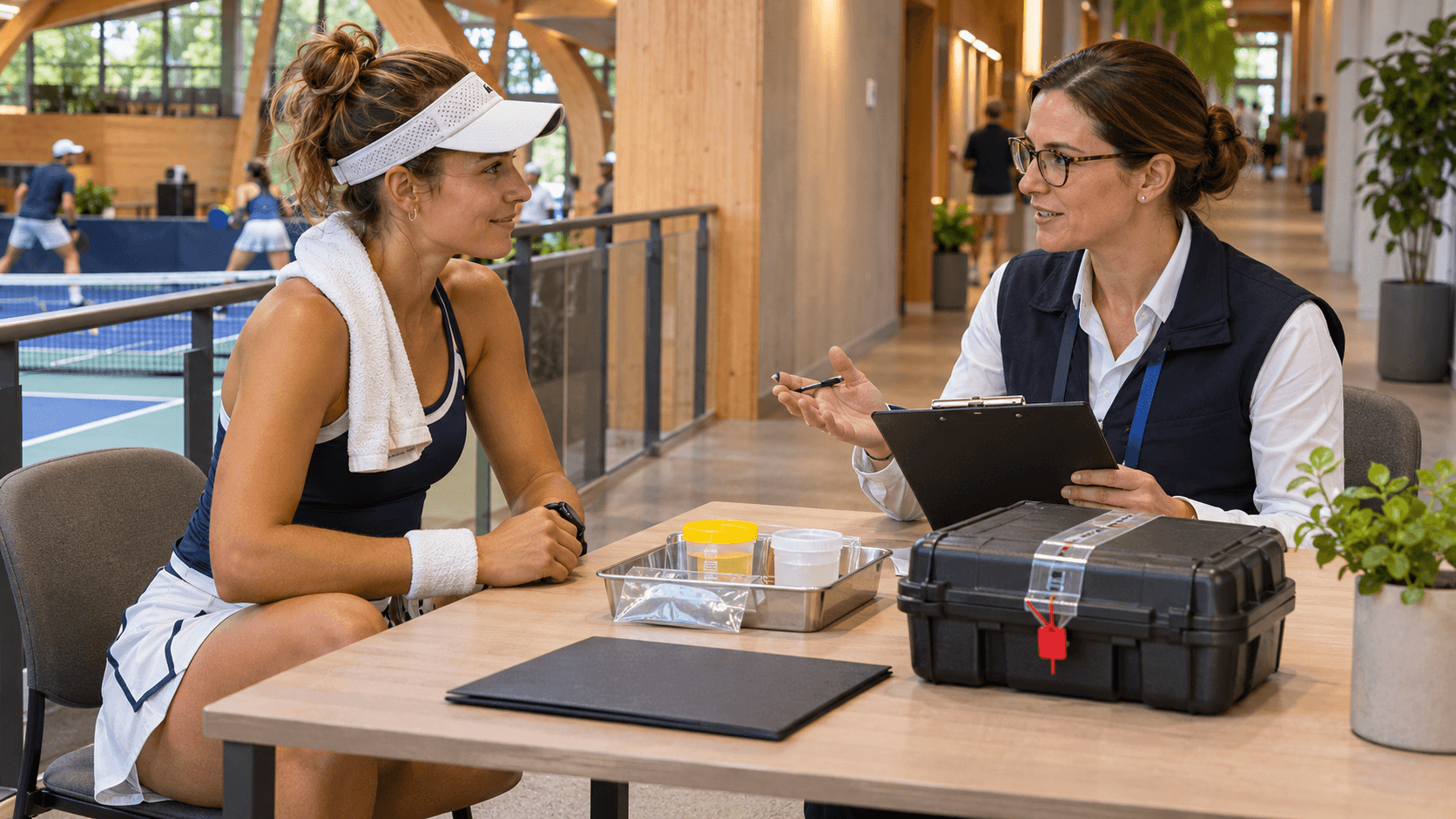
Organizers also scheduled an athlete education and awareness session covering the testing process, athlete rights and responsibilities, the prohibited list, medications, supplements and Therapeutic Use Exemptions. That educational piece may be the most immediately useful part for players who have never navigated a testing program. |
 AI generated photo for All American Pickleball Association. |
Why this matters beyond one tournament
As pickleball becomes more international, organized competition needs clearer answers about fairness, athlete welfare and accountability. Testing is not about treating every player with suspicion; it is about setting the same basic expectations for everyone who is covered by a program.
The WPF says its clean-sport program is aligned with the World Anti-Doping Code, while its integrity page also states that WPF is not yet a formal WADA Code Signatory. Those two facts can both be true: alignment describes the program’s intended framework, while signatory status is a separate formal designation.
Players should not confuse “WADA-aligned” with “WADA-approved” or assume one event establishes every future policy. The useful question is simpler: what exact rules, notices and resources apply to the tournament you are entering?
For local tournament players, this story is a preview of how the sport is maturing. Even if a club league has no testing program, stronger habits around rule-reading, safe supplement choices and medical documentation will travel well as competition becomes more structured.
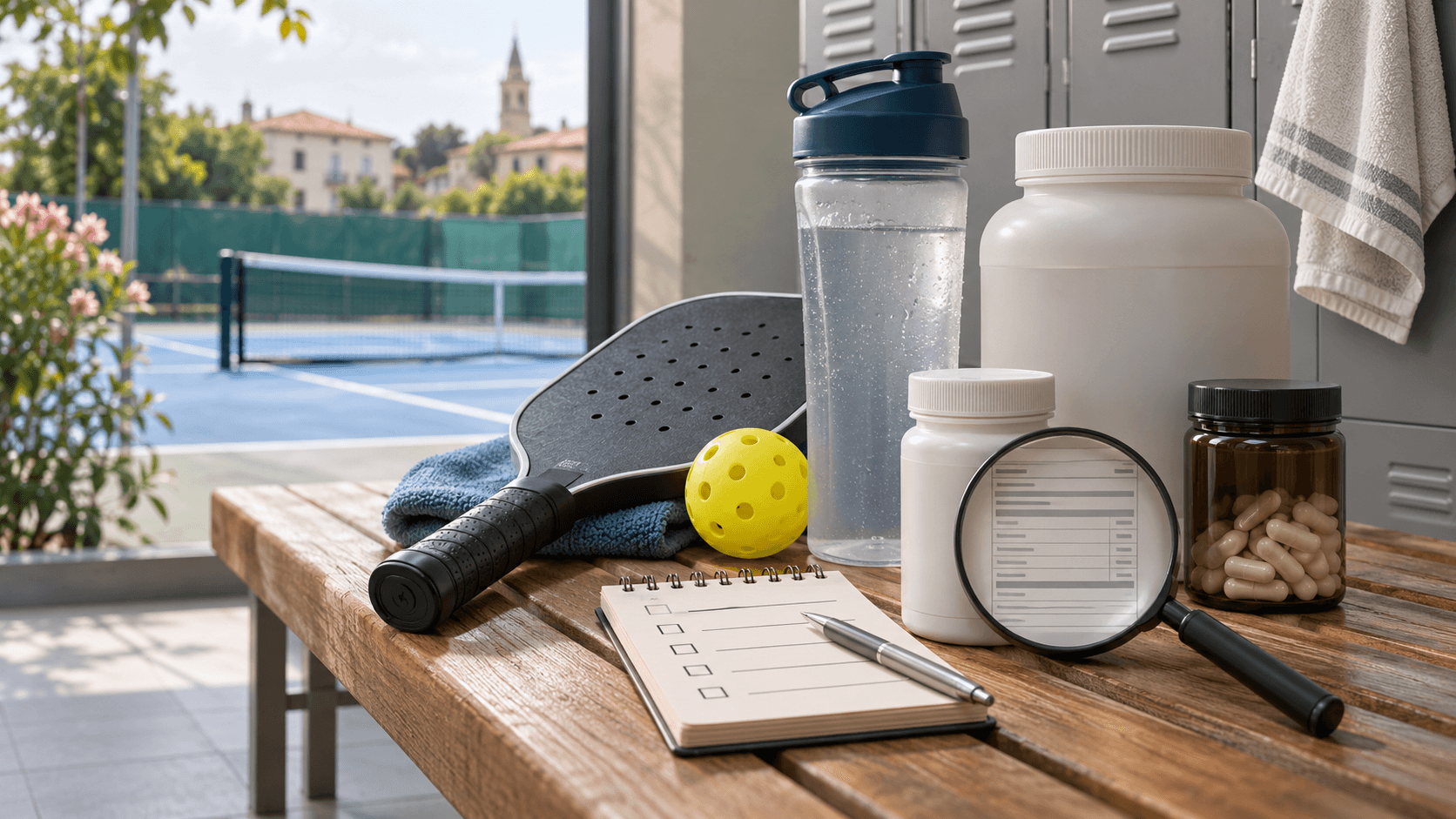
Medication, supplements and TUEs: the practical player checklist
Anti-doping rules are personal. In many systems, an athlete can be responsible for a prohibited substance found in a sample even if the athlete did not intend to gain an advantage. That is why “my doctor prescribed it” or “the label looked normal” may not be the end of the conversation.
Players should start with the WADA Prohibited List and use a recognized medication-checking resource such as Global DRO when it covers their country and product. A pharmacist or prescribing clinician can help with medical context, but event-specific eligibility still needs to be checked through the relevant anti-doping process.
A Therapeutic Use Exemption, often called a TUE, can be relevant when an athlete needs a prohibited substance or method for a legitimate medical reason. The WPF’s own guidance says applications should be made before use where possible and that emergency pathways may exist in defined circumstances.
|
 AI generated photo for All American Pickleball Association. |
What players should watch next?
The European Open program is a beginning, not a final verdict on pickleball’s anti-doping system. The WPF and EPF confirmed testing and education for a defined category; they did not publicly provide every operational detail that players, coaches, and national bodies may eventually want to see.
Reasonable questions include how broadly testing expands, how athletes receive timely guidance, which version of rules applies to a particular event and how results management will be communicated. Asking those questions is not cynical. Clear procedures protect clean athletes and make compliance more realistic.
For now, players considering WPF- or EPF-linked competition should monitor the joint European Open announcement, the WPF anti-doping hub, and the tournament’s official communications. Coaches can also turn this into a useful team conversation before travel—not after a player receives a testing notice.
The Bottom Line
The 2026 European Open’s designated-category testing program was a notable first for that tournament and a clear signal that international pickleball is moving toward more formal clean-sport expectations. It does not mean every player is suddenly subject to the same procedures. It does mean competitive players should learn the rules early, verify medications and supplements, and rely on official event guidance rather than assumptions. |
43 Comments
Join the conversation
I would rather see good education first than a lot of testing without explanation. The combination used on November 5 sounds sensible.
It is interesting to see pickleball take this step at the European Open. I wonder whether other international events will follow.
My doubles partner and I always check tournament formats early. I guess higher-level players now have one more thing for that checklist.
I hadn't considered that a common medication might matter in pickleball competition. The reminder to check early is appreciated.
Testing only one category sounds like a careful start. I'd rather see a clear process than a rushed rollout across the event.
The WPF and EPF giving notice to affected players is encouraging. Clear communication matters when the rules involve medications.
I am a little skeptical about how much one category tells us. Still, starting small could help organizers work out the details.
Does anyone know whether the education was offered before the November 5 testing? That timing could make a real difference.
Does the education reach players before they register, or only once they get to the event? Earlier would be much more helpful.
I appreciate the calm message. Most recreational players do not need to panic, but anyone entering bigger events should read the rules.
I'm glad the takeaway is preparation rather than panic. Checking supplements early seems like sound advice for anyone entering bigger events.
Ali Bey Club Manavgat must have been a busy place that week. Adding testing to a tournament schedule takes some planning.
The setting in Türkiye caught my eye. International pickleball really does look different from our casual games at the park.
It's good that the announcement says players in the category were notified. Clear communication matters when a new program starts.
I support fair competition, though I hope the rules stay easy for players to find. Nobody should have to guess about a medication.
I'd like to know what the anti-doping education covered. A practical checklist would help players preparing for higher-level tournaments.
This feels like a reasonable first step, though I would like to hear what the players thought of the testing process.
My doubles partner takes supplements, and we've never thought to check competition rules. This is a useful heads-up for serious players.
The November 5 date makes this feel quite concrete. I appreciate knowing exactly when the testing happened and who it covered.
I wonder whether other categories at future European Opens will be included. For now, the one-category approach sounds manageable.
I hope the education covers everyday prescriptions as well as supplements. Players should know where to ask questions without guessing.
It is worth repeating that this did not cover every player at the European Open. People could easily get the wrong idea.
The practical advice here is good. Checking a medication before an event sounds much easier than trying to sort it out after arriving.
I play local doubles and had never thought about anti-doping rules in pickleball. It shows how different the higher-level events are becoming.
November 5 testing in one category is a pretty small start. I would be interested to know how the organizers chose that category.
Testing at the European Open makes sense if the sport wants more formal international competition. I hope the guidance stays clear for players.
Glad the players in that category were notified ahead of time. An unexpected rule change during a tournament would be stressful.
Were the notified players given a list of medications to check? That seems like the first thing I would want before traveling to Manavgat.
The reminder about supplements is useful. A lot of players probably give more thought to their paddle than to what is in a bottle.
I like that education was included with the testing. Players need a fair chance to understand the rules before they compete.
Good to know the testing was limited to one category. That detail matters for players trying to understand what happened at the European Open.
Credit to WPF and EPF for pairing the program with education. Testing alone would leave a lot of players with questions.
I'd want to check my regular medications well before entering an event like this. Finding out at the venue would be stressful.
I play for fun, so this won't affect me directly. It's interesting to see how different international competition is becoming.
The limited scope is worth repeating. One tested category at Ali Bey Club Manavgat doesn't mean testing is coming to every local tournament.
I'm a little surprised pickleball has reached this point already. Still, it makes sense for higher-level events to have clear rules.
I hope the education side explains medication rules in plain language. Most players won't know where to start with that.
Testing on November 5 seems like a significant step for the European Open. I'm glad the affected players were notified beforehand.
Was the designated category chosen because of its level of play? I'd be interested to know how WPF and EPF decided.
The reminder about supplements is useful. It's easy to focus on your paddle and partner and forget what else competition requires.
I like that education was included with the testing. Players need a chance to understand the rules before they face them.
Totally agree with you there! Throwing players into testing without giving them the rundown first isn't fair to anyone. The education piece is really what sets competitors up for success. Giving folks a real chance to learn the ropes and understand the rules beforehand makes the whole process way smoother—and a lot less intimidating—when it's actually game time. Really glad that stood out to you!
Good to know the testing covered one category, not the whole European Open. That distinction matters for players reading the news back home.